
Signet Rings: Symbols of Authority, Identity, and Style through the Ages
By Rachel Church
From ancient Mesopotamian seals to modern-day fashion statements, signet rings have a storied history that spans millennia. Discover how these iconic pieces of jewellery have evolved from symbols of authority to expressions of personal style. Dive into the fascinating journey of signet rings and their enduring allure.
What’s a signet ring?
Signets are jewels which bear an image which can be used to identify the wearer. They were made to be pressed into wax or clay to seal a letter or package. The seal acted as a legal signature and proof of authenticity. Signets and seals can be large or small, worn on the body or kept with your writing materials. Because the seal was a sign of identity and authority, it was important to control access and keep it close at hand (or on your finger!).

Sealed letter with wax impression
Signet rings were perhaps the earliest form of ring. A seal threaded onto a wire and fixed to the finger became the signet ring we know now. They are often beautiful works of art incorporating tiny engraved pictures which can showcase the artistry of the sculptor.
Many signet rings are made entirely of metal. The image is engraved in reverse or intaglio into the gold, silver or base metal bezel of the ring. However, some very beautiful rings include engraved hardstones like onyx, carnelian or jasper.
The image on a true signet ring will appear in reverse so that it shows correctly when pressed into wax. But more recently, the signet ring has lost its role in sealing letters and has become a statement of identity and style. It has become a ring which anyone can enjoy wearing.
What does a signet ring look like?
A signet ring, at its simplest, is a ring which holds a seal or signet of some sort. The design of the signet can be in the form of a heraldic coat of arms, a personal device or a monogram with the initials letters of the owner’s name. They can also be known as seal rings because they were used to seal a letter or package with a design pressed into coloured wax.
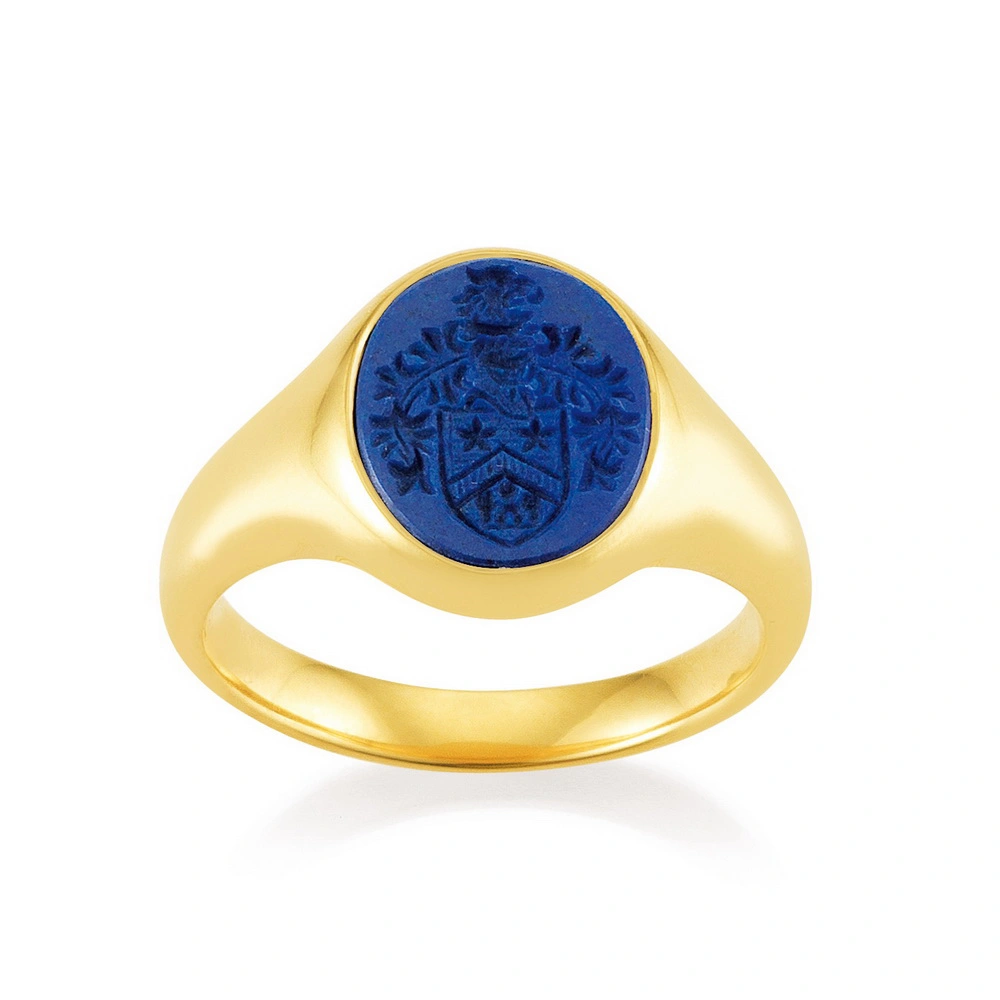
Signet ring from the Hallmark Collection, 750/ yellow gold, oval-shaped lapis lazuli, intaglio engraving: coat of arms
The motif on a signet ring was intended to identify the owner, whether when worn on the person or pressed into the wax seal of a letter. It was important to choose an appropriate signet which reflected your place in society and your values and interests.
Members of aristocratic families used heraldry to identify themselves from the middle ages to the current day. A family coat of arms included a shield (or a lozenge or diamond shape for a woman) with a helmet and crest above it and supporters on either side. The crest on a signet ring might also include a family motto engraved on a ribbon design. The shield incorporated designs relating to the original family and other families they had married into.

Oval signet ring from the Hallmark Collection, 750/ rose gold, deep seal engraving: full coat of arms
Signet rings sometimes include the entire coat of arms, or, particularly in the United Kingdom, they might use the crest and family motto alone. Colour was an important element of heraldry, which was difficult to include in a signet ring, although hatched patterns helped to distinguish between families with similar designs.
If a coat of arms was not appropriate, a signet ring could include a religious image, a personal device, the name or initials of the owner or any other image which the wearer felt represented them.
The most common form of a signet ring uses a flat topped bezel with the design engraved into it (intaglio). The ring often included a border around the design, which framed the image when pressed into wax. If the image is engraved in reverse, it will appear correctly on the wax seal.
Although early signet rings were practical objects, they were also statements of style and identity. The bezel of a signet ring serves as a canvas for creative expression. Designers leverage this inherent shape to craft a myriad of variations, allowing for a broad spectrum of personalised styles. The enduring popularity of signet style rings stems from the versatility of their basic design, enabling them to transcend traditional associations and evolve into diverse and customizable fashion statements.
The timeline of the signet ring
Early history
Where does the history of the signet begin?
We might say that the signet ring began with the cylindrical seal of the Assyrians, the people of ancient Mesopotamia (the lands which form parts of modern Iraq, Iran, Kuwait, Syria and Turkey). These finely engraved stones were rolled onto clay to form an image or message. In order to keep the seal close at hand, it was eventually put on a wire and worn on the finger. Keeping the seal close and safe meant that a message sealed with this design could be trusted.

Cylinder seal, Assyria
17th century BCE
© The Metropolitan Museum of Art, New York

Ring with scarab beetle bezel and engraved back
Egypt 1985–1550 BCE
© Art Institute of Chicago
The idea of the signet ring moved from Assyria to ancient Egypt. As literacy grew, so did the use of the signet ring. Images of rulers and deities were often found on these early signet rings. Egyptian rings shaped like a sacred scarab beetle with the name of the owner or a pictograph on the base were introduced in the middle of the XIIth dynasty (around 1800 BCE).
‘To seal the affairs of his kingdom’: the signet as a sign of authority
The signet ring was an important sign of authority and authenticity. The bezel was often engraved with the name or image of its owner, like the Egyptian rings which bear the cartouches of the Pharaohs.
This ring has a square bezel and the names of queen Hatshepsut, one of Egypt’s greatest Pharaohs and her young step-son Thutmose III. Hatshepsut was originally Thutmose’s regent, before becoming Pharaoh in her own right. This ring shows their combined early rule.

Ring inscribed with the cartouches of Hatshepsut and Thutmose III
Egypt, ca. 1479–1458 BCE
© The Metropolitan Museum of Art, New York

Signet ring with the throne name of Tutankhamun
Egypt, ca. 1336-1327 BCE
© The Metropolitan Museum of Art, New York
Analysing signet rings can help to understand political and social changes in societies. A signet ring bearing the boy pharaoh Tutankhamun’s throne name, Neb-kheperu-re, with the phrase “beloved of Amun, lord of eternity” may have been altered to reflect religious changes. British Egyptologist Nicholas Reeves has suggested that it originally also included the god Aten, the sun deity, who had been promoted as the only deity by the previous pharaoh Akhenaten.
A signet ring carried the power of the monarch and was in a sense, a substitute for the ruler. When the Macedonian king Alexander the Great was dying, he took his signet ring from his finger and passed it to his general, Perdiccas. He placed the ring, described as that ‘with which he (Alexander) was wont to seal the affairs of his kingdom and of his empire’ on the empty throne. When a new ruler received the signet ring, it was part of a symbolic transfer of power.
When Roman Emperor Julius Caesar’s rival Pompey was killed in Egypt, Caesar was sent both his decapitated head and his signet ring – an inarguable sign of authenticity. Pompey’s head showed his physical death and his signet ring represented his political authority, now under Caesar’s control.
Minoan signet rings
Signet rings showed personal identity as well as political and economic power and they were often made of the finest materials. Some of the most beautiful early signet rings were made in the Minoan and Mycenaean periods from about 1700 to 1000 BCE. Their gold bezels are very finely engraved with mythological scenes, like a ring showing a sitting goddess and a row of figures bringing offerings. The large number of surviving signet rings suggests that they were an important form of jewellery.

Gold ring with Sitting Goddess and row of Minoan Genius figures bearing offerings, found in context from Mycenaean Greece, but probably made in Minoan Crete
National Archaeological Museum of Athens
© Zde, CC BY-SA 3.0, via Wikimedia Commons
The unbreakable seal
It’s difficult to remove a clay or wax seal without leaving evidence. Signet rings were used to seal packets of letters and parcels or to secure buildings – the unbroken seal with the design of the sender pressed into it showed that the item had not been disturbed.
In the Bible story of Daniel, King Darius had him imprisoned in the den of lions. The stone placed across the entrance was sealed with the king’s signet and that of his nobles. This was a symbolic act to show that breaking the seal to release Daniel would be directly disobeying the King. The modern equivalent of this is a judicial or police seal placed on the doorway of a crime scene – a sign of the state’s authority over the area and a way to prevent unauthorised access.

Ring with image of Hermes fastening his winged sandal
Greek (South Italy), 4th century BCE
© The Metropolitan Museum, New York
Representing the person through their signet ring
People chose the designs of their signet rings to reflect their identity or ideals. The great Roman Emperor Julius Caesar, for example, chose the figure of Venus Victrix, the goddess of love fully armed, from whom he claimed to descend. This represented him as a powerful but pious warrior. The image used on your seal travelled far from you and represented you when absent. When the Roman poet Ovid was exiled by the Emperor Augustus, he wrote to his loyal friend, who wore Ovid’s portrait in his own signet ring: ‘In casting your eye upon this, perhaps you sometimes think “How far away is poor Ovid now”.’
The theologian Clement of Alexandria (ca. 150 – 215 CE) was anxious that Christians made good choices with their appearance. Although he didn’t approve of jewellery in general, he allowed that signet rings were necessary to seal letters.

Gold ring with intaglio of seated woman and flying Eros
Greece, 2nd half of the 5th century BCE
© The Metropolitan Museum of Art, New York
However, he warned Christians to avoid images of idols, like the gods of love Aphrodite and Eros, images of weapons and portraits of beautiful youths were also forbidden as they encouraged violence and lust.
Images of drinking cups or Dionysus, the god of wine, were commonly used on Roman rings. But, according to Clement, they were inappropriate as Christians should be temperate.
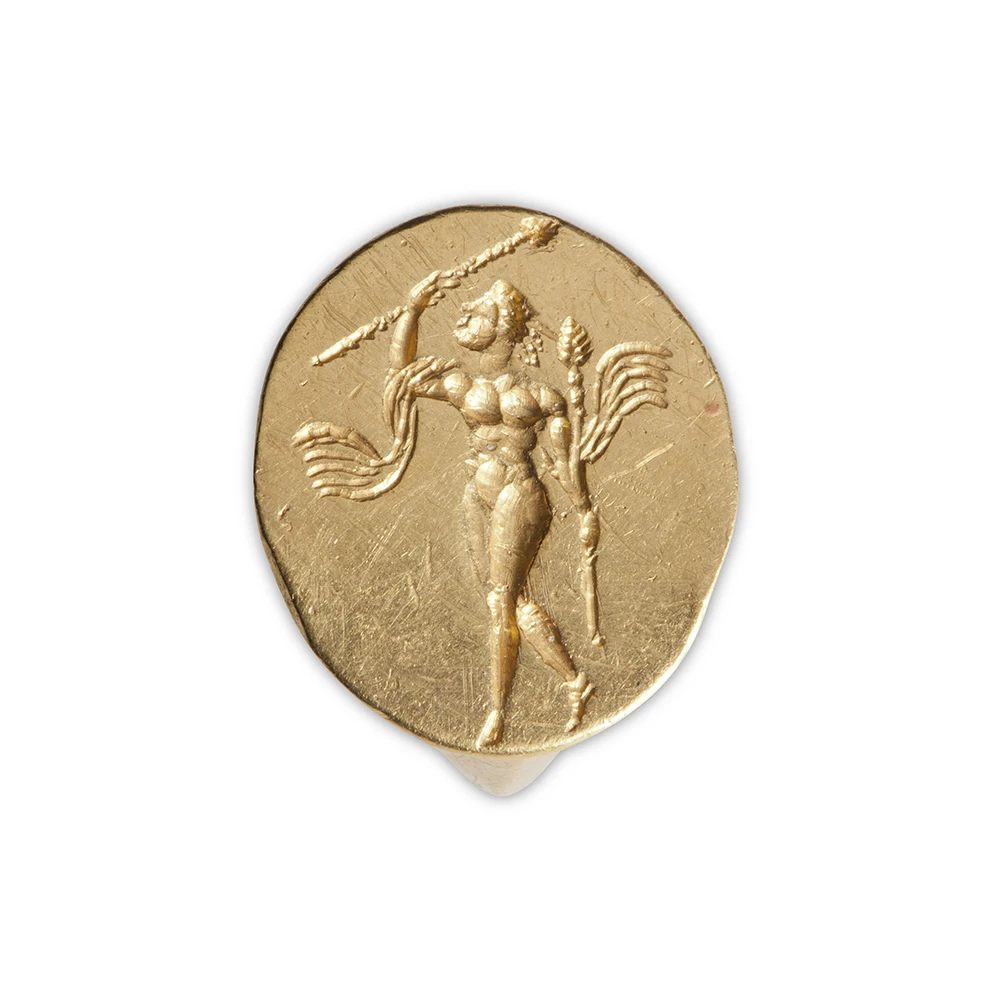
Gold signet ring with figure of Dionysos
Greek world, 4th century BCE
© Schmuckmuseum Pforzheim, photo Petra Jaschke
The right design for a Christian would be a dove, a cross, a ship, a lamb or the monogram of Christ. Rings with the images of saints were a sign of devotion and a way to ask the saint for their protection against spiritual and earthly dangers.

Signet ring with image of Christ or a saint
Gold, niello
Early Christian-Byzantine, 7th century
© Schmuckmuseum Pforzheim, photo Petra Jaschke
The image on your ring, used to seal your letters, was a real representation of who you were and what you believed in. A baker might choose the goddess Ceres as the protector of the harvest while a ring with an image of Medusa was a protection against the evil eye.
Signet rings in the dark ages
A letter from Lord Berengario in Verona in 906 underscores the importance of the signet:
‘So that this may be more truly believed and more faithfully observed, we order this to be sealed with our ring, confirming it with our own hand’.
The seal on Lord Berengario’s letter would have been clearly recognised and proved that the communication was genuine and that it should be obeyed as clearly as a direct command from Berengario.
Some rings included the name of their owner as well as an image. A silver ring from the 6th century has the name Bratha as well as the image of a soldier, trampling on a dragon. It was probably made for a military man.

Ring with image of warrior and dragon
Possibly Egypt, 5th to 6th century
© The Metropolitan Museum of Art, New York
Rulers from the Germanic tribes which replaced the Roman Empire also used signet rings. A solid gold ring with a monogram of the name of Queen Aregunda (now in the care of the Bibliothèque Nationale de France) shows that educated women also used signets. Another ring with a monogram reading ‘Elena’ belonged to a literate and important woman who had the signet ring to prove it.

Ring with the monogram name of Elena
Merovingian Empire, ca. 700-750
© Schmuckmuseum Pforzheim, photo Petra Jaschke
The signet in the middle ages
Signet rings in the middle ages were often made entirely of metal – gold for the richest people and silver or bronze for those with less money.
Heraldry, the use of particular designs and colours to identify an individual or family, was invented in the middle ages. If you were entitled to a heraldic coat of arms, you could use it on the bezel of your ring. Rings sometimes used the shield or the crest from a family’s arms rather than the whole design. Colours are an important part of heraldry and were sometimes represented through patterns of engraved lines and dots known as ‘hatching’.
Wearing a signet ring was not just a practical statement but a way to show that you had business to manage and you were a person of importance.

Gold armorial signet ring
Europe, ca. 1475
© Art Institute of Chicago
Some Byzantine rings, like the one made for the officer Michael Zorianus, bear his full name and title. Perhaps he used this ring to send official or military correspondence?

Gold signet of Michael Zorianus
Byzantine Empire, ca. 1300 CE
© The Metropolitan Museum of Art, New York
People without a coat of arms could use their initial letter or a design related to their trade. A ring with the image of a ship was a good choice for a merchant or a sailor. A tailor might choose a pair of scissors. Members of guilds sometimes wore rings with the sign of their trade – a plain silver ring engraved with the head of an ox under an axehead might have belonged to a butcher.

Possibly butcher’s signet ring
Silver, ca. 1500-1700
© Landesmuseum Württemberg
Geometric signs known now as merchants marks were also popular. We might think of them as an early form of company branding. These designs often used a cross, the number 4 or a heart as part of the motif. Ownership marks were placed on bales of goods but were also used to mark personal items. They can often be seen on tombstones or on stained glass or building facades.

Ring with merchant’s mark, ca. 1500-1600
© Portable Antiquities Scheme, CC License
Beautiful and expensive rings were set with re-used engraved classical stones, surrounded by an inscription. Wearing a ring like this was a sign not only of wealth but also of your ability to appreciate classical learning. The secrets of engraving gemstones were being slowly rediscovered but the best quality stones were still those made in the classical world.
Renaissance signets
A coat of arms without its heraldic colours is hard to recognise. Putting coloured foil, to show the arms in full colour, behind an engraved hardstone bezel was the perfect way to create an expensive and beautiful signet ring.

Signet ring with the Van Wijnbergen coat of arms
Netherlands, ca. 1535
© Rijksmuseum, Amsterdam
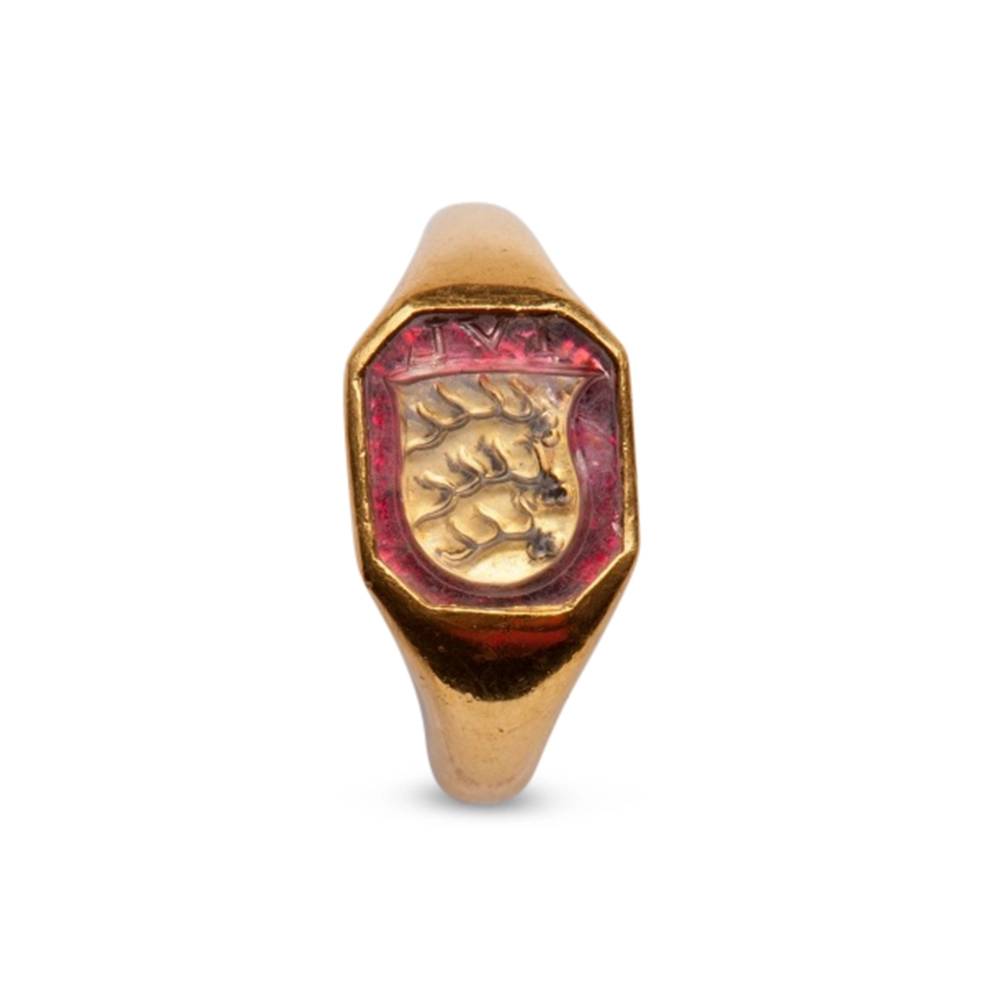
Ring with arms of the von Grüningen-Landau family
Germany, 1400-50
© Landesmuseum Württemberg, Stuttgart / (CC BY-SA)
Rings like this can be seen proudly worn on portraits, like that of Hermann von Wedigh III, painted by Hans Holbein in 1532.
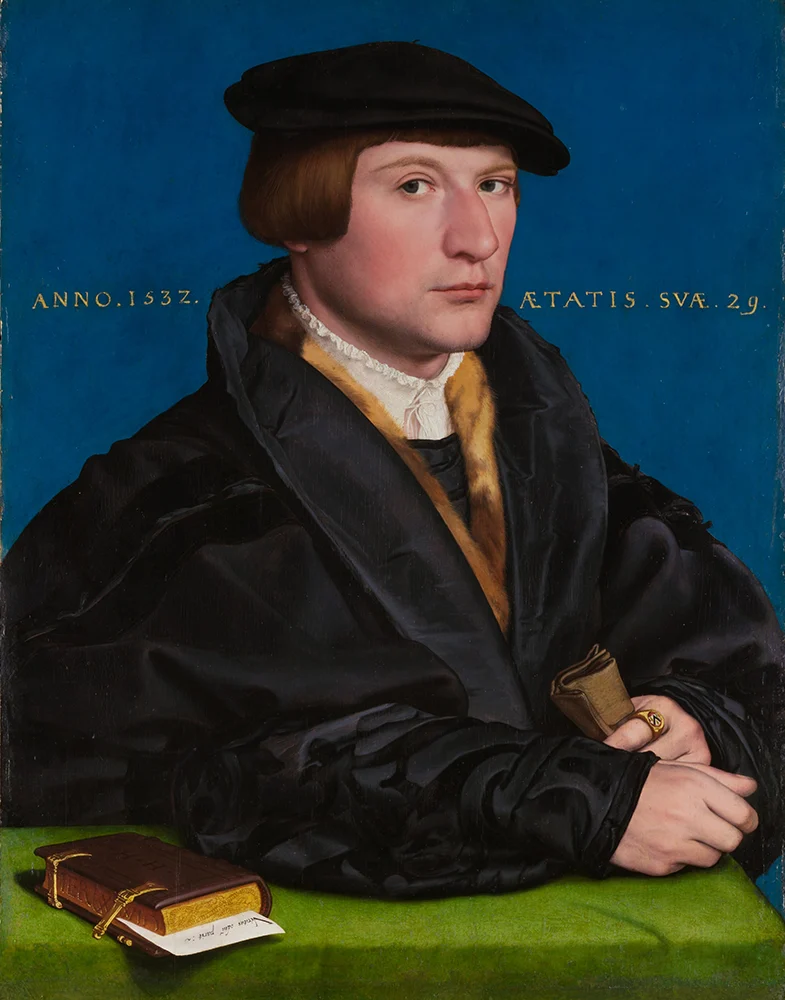
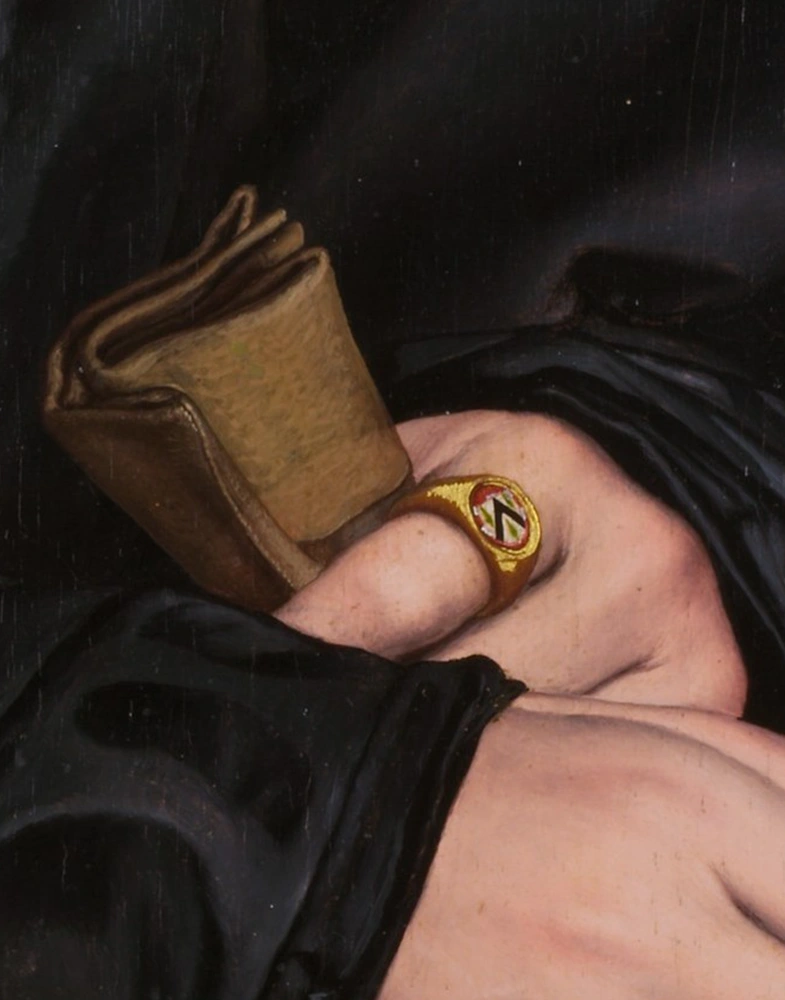
Portrait of Hans Wedigh III (died 1560), by Hans Holbein the Younger, 1532
Bequest of Edward S. Harkness, 1940
© The Metropolitan Museum of Art, New York
Jewelled signet rings
Signet rings set with engraved gems were even more impressive than expensive gold rings. The Milanese gem carver Jacopo da Trezzo, working at the Spanish imperial court, was credited with finding the secret of engraving a diamond. This was described as ‘a thing more divine than human’.
These engraved hardstones were favoured by the highest ranks of society. Emperor Charles V of Spain had a ring set with his arms engraved onto a diamond. Members of the Medici family in Florence wore rings with engraved rubies, emeralds and diamonds. In England, Henrietta Maria, the wife of Charles I, had a particularly magnificent signet ring set with a diamond engraved with the royal arms. The stone was a lozenge shape, because men’s coats of arms were traditionally placed in a shield shape and women’s arms were in a lozenge or diamond shape.
Connoisseurs at royal and papal courts began to put together collections of engraved stones, sometimes set in rings. In Italy, the Medici family in Florence, the Gonzagas in Milan and the Grimani in Venice competed for the finest stones and jewels.
Sealed with secrecy
People hoped that a letter sealed with their signet would stay private but this was not always the case. Mary, Queen of Scots, imprisoned by her cousin Elizabeth I of England from 1568, wrote to her supporters to plot her liberation. Elizabeth’s spymaster Sir Francis Walsingham carefully intercepted the coded and sealed letters. The seal was removed with care so that the letter could be copied and it was then sent on its way. Mary never realised that her secret plans, hidden under her private seal, had been discovered and she was eventually beheaded for treason.
‘I yield to no one’: Erasmus’ signet ring
The great humanist thinker Desiderius Erasmus wore a signet ring set with a Roman carnelian engraved with the head of a god. Erasmus believed this to be Terminus, the god of boundaries and a model of fortitude. He identified with this so strongly that it became a key part of his public image. He adopted the motto ‘Cedo nulli’ (I yield to no one) and used the image of Terminus on his personal seal. Hans Holbein also included the image of Terminus in his portraits of Erasmus. However, using this strongly worded motto and the image of a pagan god caused Erasmus to be criticised by some religious groups.
The image of Terminus was so key a part of Erasmus’ identity that it served to prove the validity of his will, written in February 1536. He wrote:
‘I wrote down this last wish of mine to confirm its credibility with my own hand and stamped it with the seal of my ring, the terminus’
Erasmus left ten gold rings in his will, including his personal signet, which he left to his friend, the Basel merchant Bonifacio Amerbach. It is now in the Basel Historical Museum.
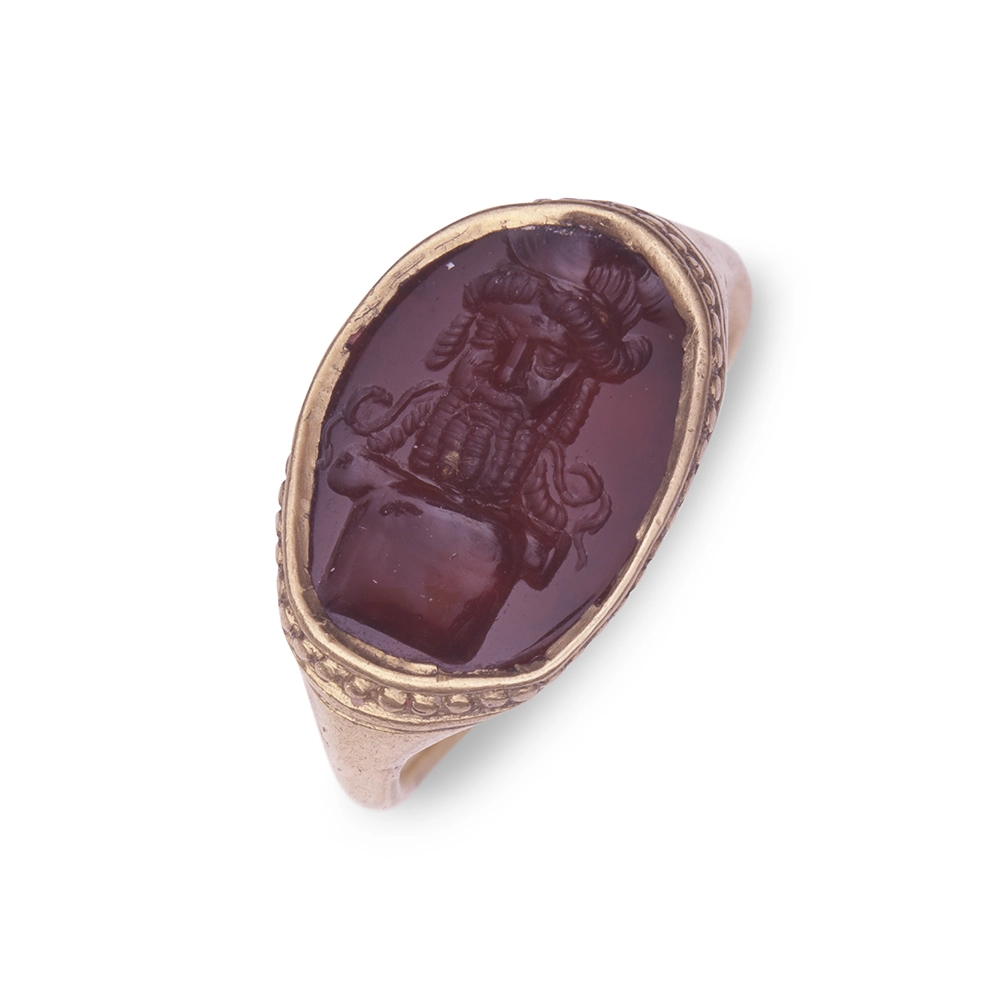
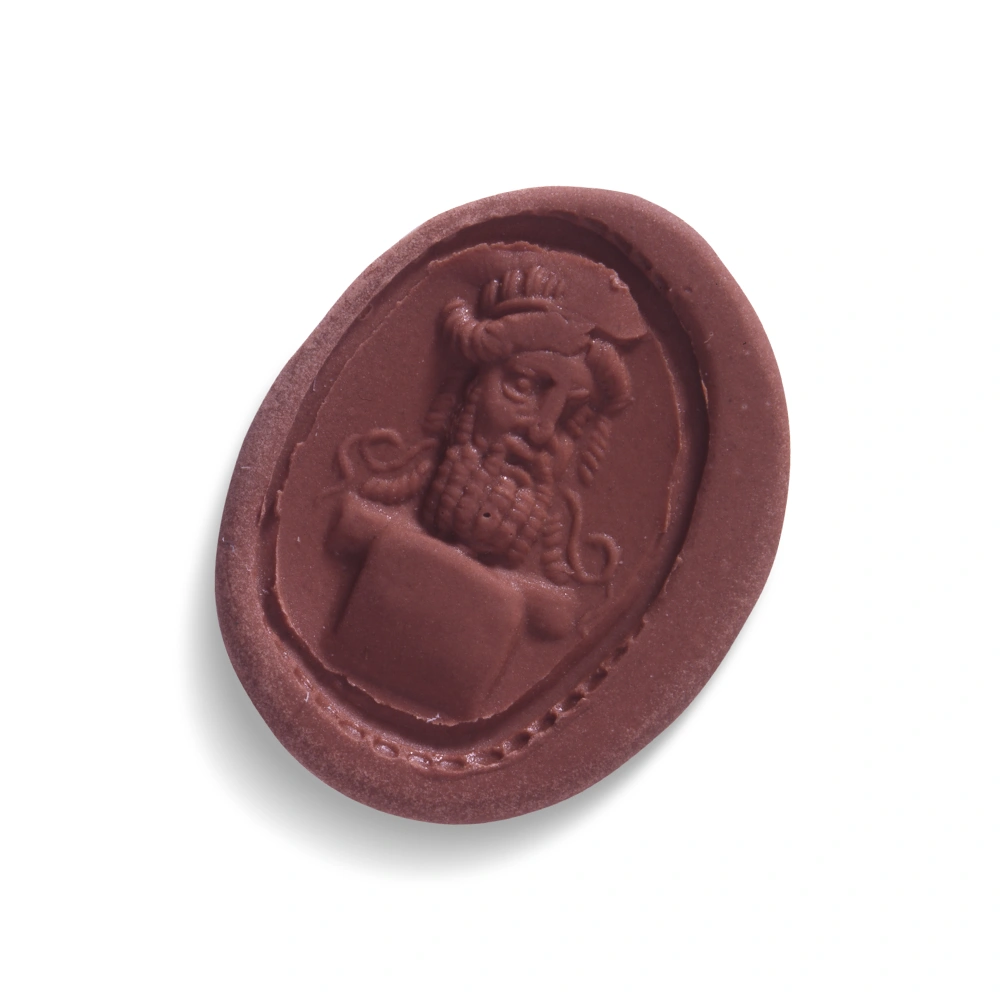
Signet Ring of Erasmus of Rotterdam, before 1509
Gold and carnelian (Roman gem, 1st century AD)
© Historisches Museum Basel, photos Peter Portner
Erasmus’ signet wasn’t just an expensive jewel which showed his familiarity with Roman literature and status as a scholar. It was also the memorial of a friendship. In 1508, Erasmus was tutor to Alexander and James Stewart, the two illegitimate sons of king James IV of Scotland. He was responsible for accompanying them on their tour of Italy and teaching them Greek and rhetoric. When they parted, Alexander took the signet ring with the engraved carnelian off his own finger and gave it to Erasmus as a parting gift. Alexander died a few years later at the battle of Flodden. For Erasmus, wearing the ring must have been a sign of his connection with the son of a king and a souvenir of a young friend who had died too soon.
The signet ring as security
Not only could a signet ring seal your letter and keep it safe, but it could also be a proof of identity.
The lovers in the medieval legend of Tristan and Isolde promised to stay faithful to each other though they were to be parted. Isolde gave Tristan a ring engraved with her seal to serve as a physical reminder of their love. In one version of the story, Tristan appeared before Isolde in disguise, and by showing her the ring, he was able to convince her of his identity.
In a 1606 play by Thomas Heywood, a young man sends a messenger with his signet ring to collect goods:
‘Receive thou my seal ring
Bear it to my factor
Bid him by that token sort thee out forty pounds of such wares
As thou shalt think most beneficial.’
Just as a letter sealed with a familiar image was a sign of authenticity, having the ring itself showed that the bearer represented the ring’s owner.
18th century
The eighteenth century signet was an elegant object. As well as signet rings, people used fob seals. These were little seals which hung from a watch-chain or a chatelaine (a collection of watch, seal, and other personal objects which hung from the waist). Alongside signet rings and fob seals, small seals with handles were kept on the desk or with writing materials.
The appreciation of ancient Greek and Roman art, known as neoclassicism, also prompted the creation of very skilfully engraved hardstone signets.
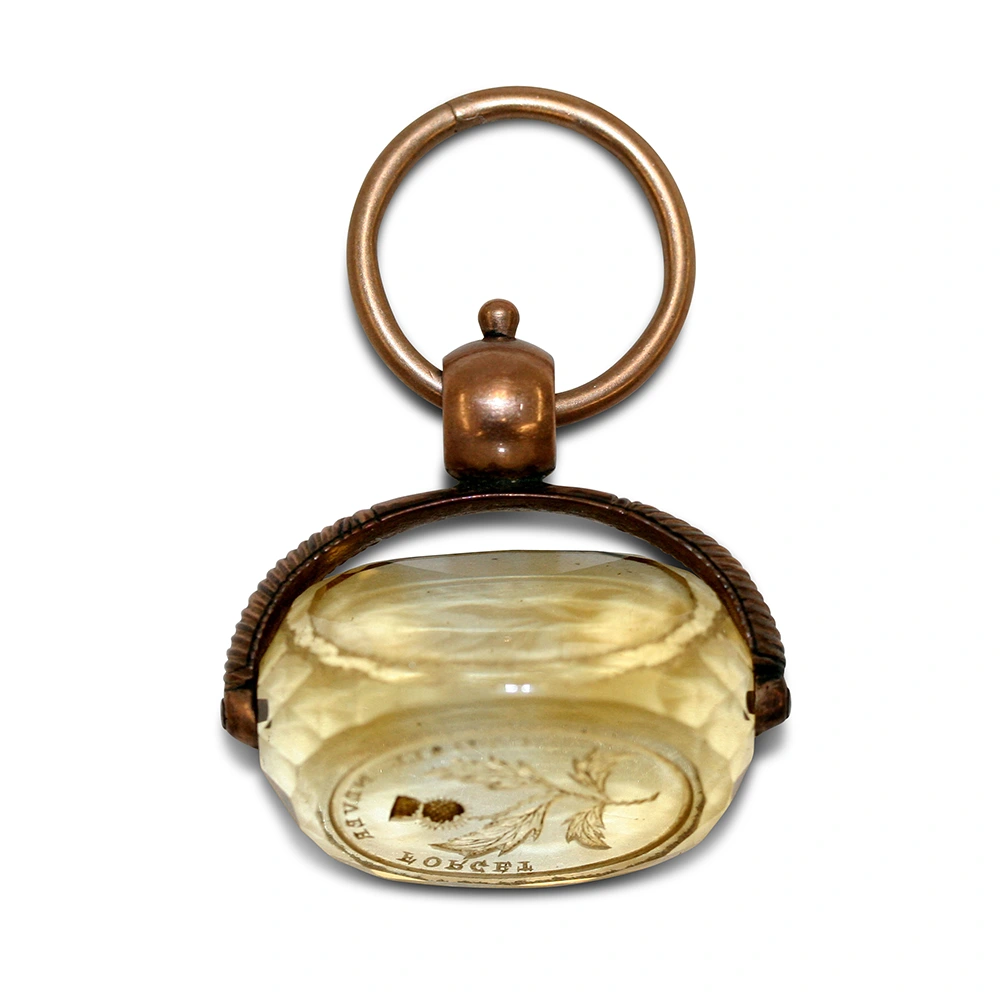
Engraved citrine fob seal, probably British, ca. 1820–40
© The Metropolitan Museum of Art, New York
The collector’s ring
Collectors, inspired by the great Renaissance collections, enjoyed beautiful engraved hard-stones. Sometimes these were original Greek and Roman stones found in archaeological excavations and put together in display cabinets known as dactyliothecae. Others preferred to use them in jewellery set in rings, brooches and even necklaces.
Although some rings could have been used as signets, many were principally worn as signs of good taste and education.

Gold and engraved amethyst signet ring
Italy, second half of the 19th century
© Schmuckmuseum Pforzheim, photo Petra Jaschke
Learning about the history of engraved stones (glyptic art) was a way to connect with the art and values of the Greek and Roman world. Great collectors like George Spencer, the 4th Duke of Marlborough and his wife Georgiana, put together exceptional collections of gems, combining intaglio carvings suitable for signet rings with three dimensional cameos. The Russian empress Catherine the Great also owned an enormous number of engraved gems as well as cabinets of glass copies and wax impressions of gems in other collections.
Owning a collection of engraved gems, or perhaps their impressions formed in plaster or glass, was a sign of refinement. Collectors met to discuss and exchange gems or to research the designs and inscriptions.
Some patrons, like Georgiana Spencer, commissioned gem engravers such as Giovanni Pichler (1734-1791) to create new gems in the antique taste or even to have their own portrait carved. Societies were set up across Europe to encourage the study and perfection of hardstone carving. Engraved gems by masters such as Pichler are now highly valued and modern collectors are willing to pay very high prices for them.
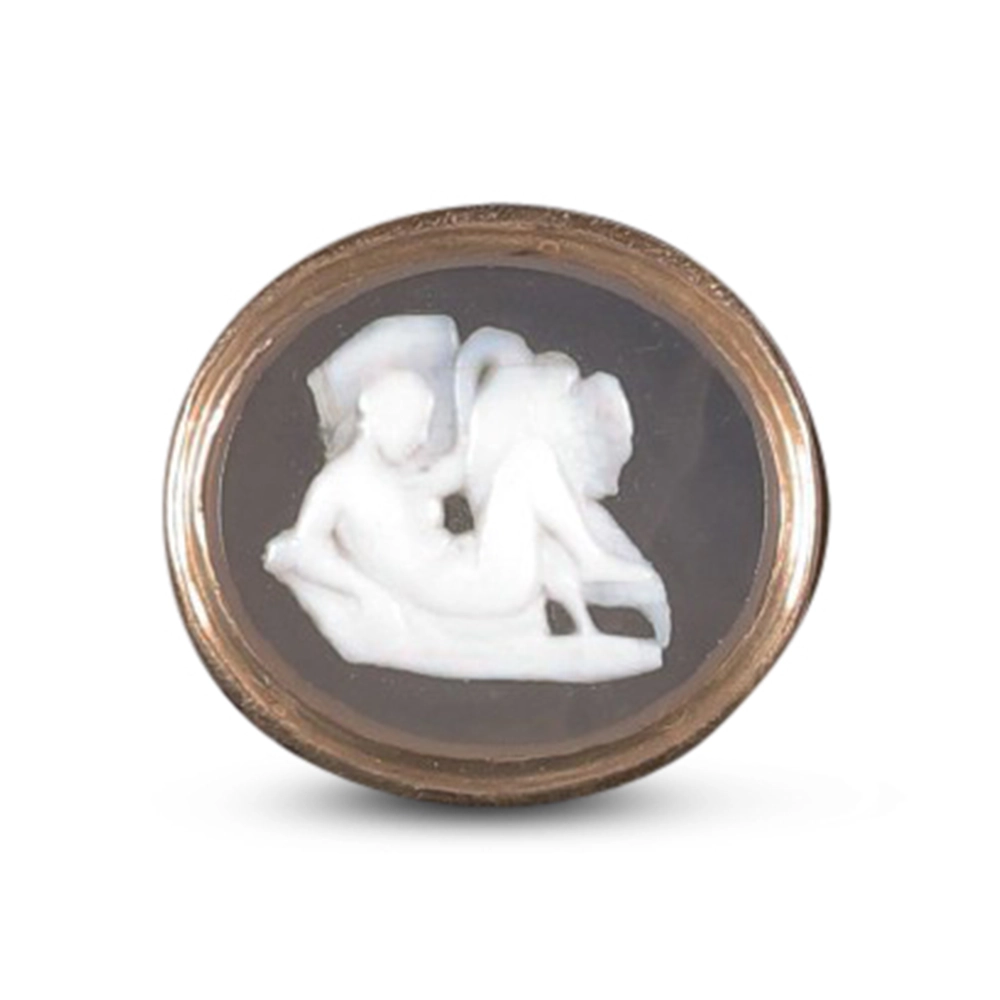
Cameo ring of Leda and Zeus as a swan
1801-20
© Landesmuseum Württemberg
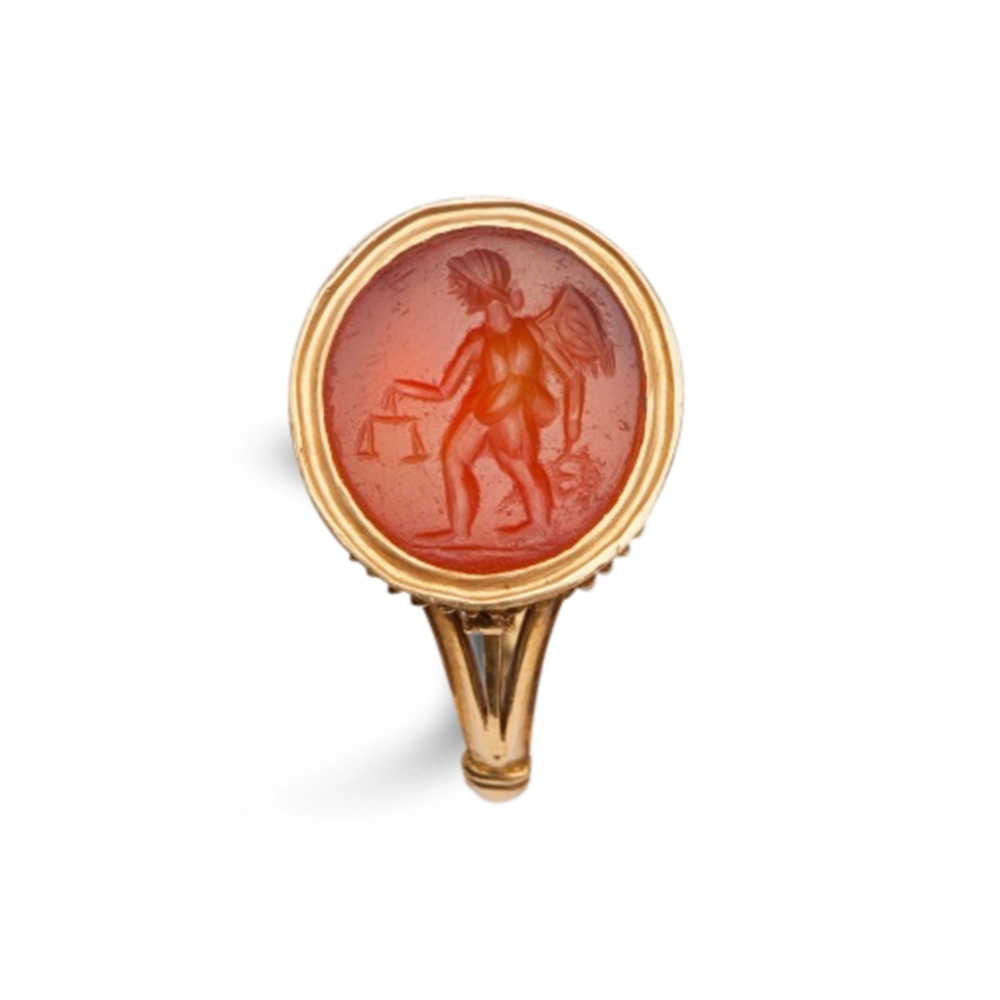
Ring with intaglio portraits of the Roman Emperor Hadrian (76-138 AD) and his favourite Antinous (110/115-130 AD)
© Landesmuseum Württemberg
Although women did not have the same educational opportunities as men, many took an educated interest in the classical world. Queen Charlotte Mathilde of Württemberg (1766-1828) owned at least 40 rings with engraved stones, including this ring set with a female portrait. She left them to the Kunstkammer in Stuttgart in her will.
Rings set with cameos (three dimensional sculptures, rather than intaglios which were carved into the ring bezel) were not used as signet rings as they did not have a flat surface, but they followed many of the same fashions and were worn in the same way as conventional signets. They were also collected in dactyliothecae (engraved gem or ring cabinets) and studied by connoisseurs. Long after signets ceased to be necessary for sealing letters, they continued to be collected and enjoyed.

Ring with intaglio portraits of the Roman Emperor Hadrian (76-138 AD) and his favourite Antinous (110/115-130 AD). © Landesmuseum Württemberg
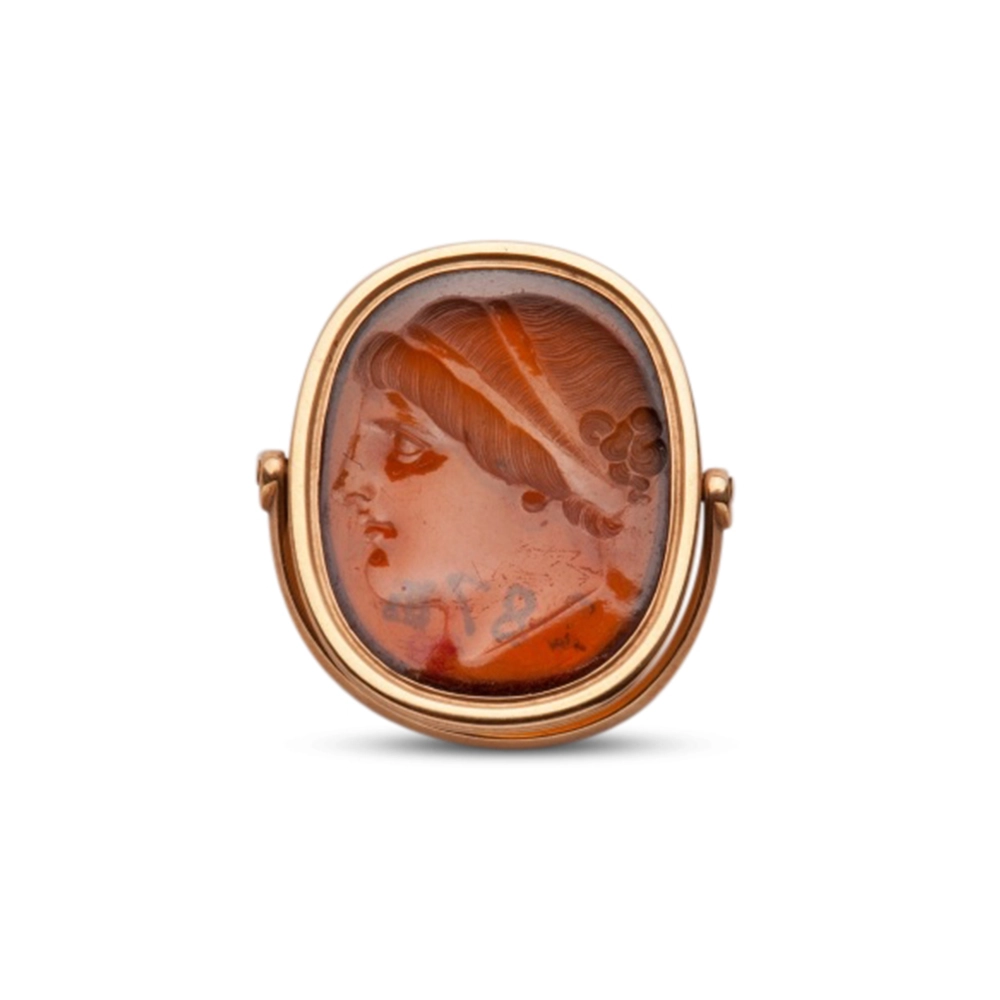
Intaglio with a female portrait, ca. 1800
© Landesmuseum Württemberg
A signet with a cypher
Metal rings engraved with a monogram or cypher of the owner’s name were a cheaper and more accessible kind of jewellery than a carved Roman or Greek hardstone. Jewellers’ trade cards, like the London card for Leadbetter, advertised their ability to make ‘Engraved Arms & Crests, Cyphers and other devices on the most reasonable terms’.

Trade card for the London jeweller Leadbetter, ca. 1800-1850
© The Metropolitan Museum of Art, New York
Monograms and cyphers are both made up of a combination of initial letters but they are combined in a slightly different way. A cypher is made up of individual letters overlaid or interlaced and can be split into its constituent letters. A monogram is made by combining the elements of the letters – the upright on a letter E, for example, might also be used to make a letter R. Monograms and cyphers can be difficult to interpret unless you know the original name they are based on.
Some goldsmiths and engravers specialised in making seals for rings and fobs. They used books of ornament, like ‘A Complete Round of Cyphers’ published by Garnett Terry in 1796. People used their family crest, coat of arms or simply a monogram for their ring or fob seal. A simple monogram was a tasteful and effective design, which could still have variety and interest.


A complete round of cyphers for the use of engravers, painters, sculptors, jewellers, hair workers, enamellers, pattern-drawers, &c. By Garnett Terry, London, 1796
© Institut National d’Histoire de l’Art, Paris
19th century
‘I do not approve of men wearing many rings – in fact, one, a seal ring is comme il faut.’ said Vogue magazine in 1893.
Men in the 19th century wore much less jewellery than in earlier years but the signet ring remained in fashion. As a practical object, it escaped the accusation of vanity. A simple monogram or crest engraved into the metal was in good taste. Or, the customer might choose an engraved jade, agate or carnelian bezel. Women also wore signet rings or used a small desk seal. The little finger was the most used for the signet ring, then as now.

Signet ring with engraved agate monogram
France, 19th century
© Musée de la Vie Romantique, Paris
The invention of adhesive envelopes made the signet ring less necessary as wax seals gradually went out of fashion but it continued to be worn as an elegant jewel and sign of identity.
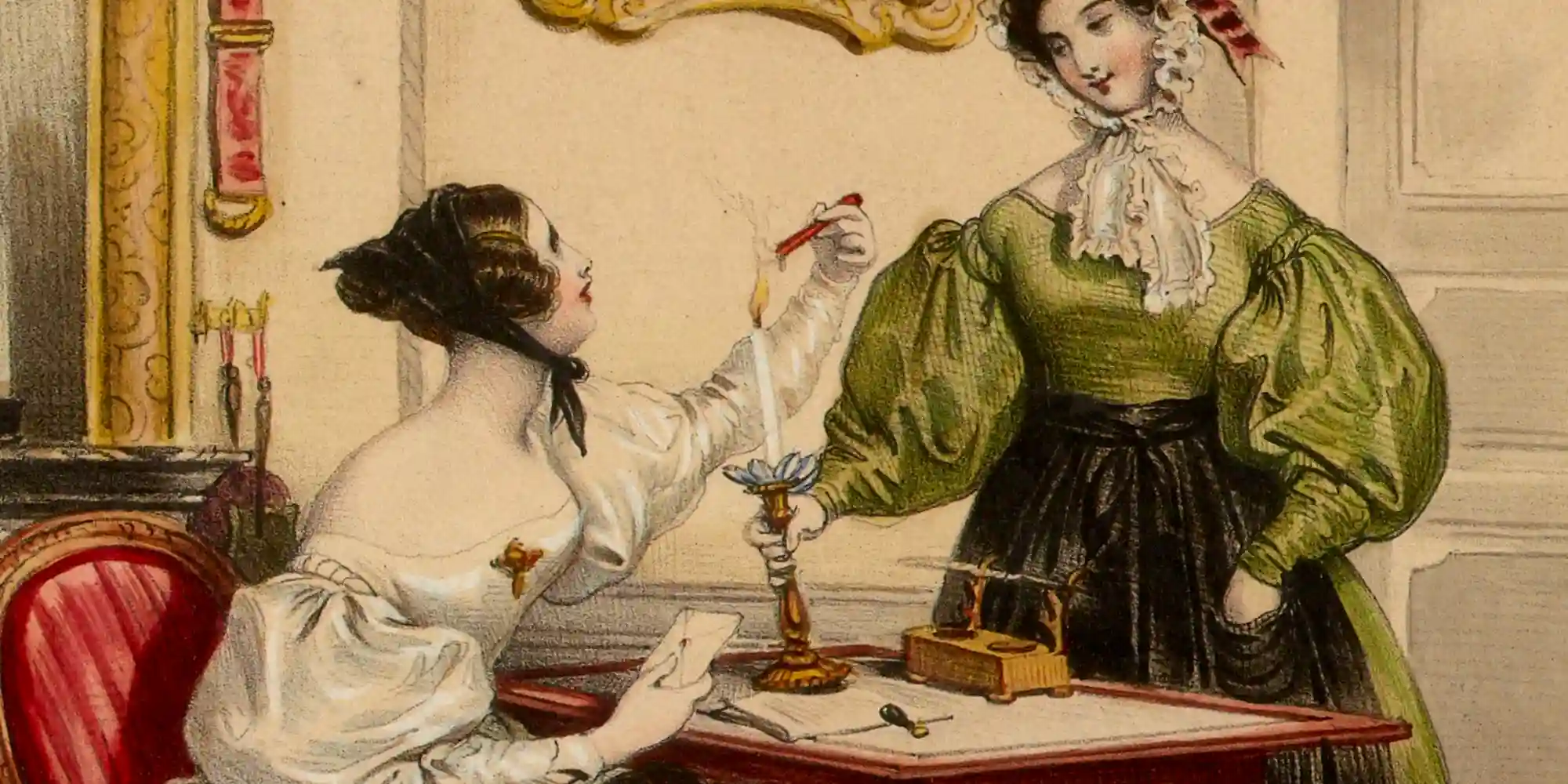
Detail from fashion plate, La Lettre, Paris, 1832
© Musée Carnavalet, Paris
People who had a family coat of arms could use the crest or arms on their ring. In the United Kingdom, the College of Arms kept an official register of family arms. To use a coat of arms, the wearer would have to prove descent from a male member of the family. However, it is also possible to apply for a grant of arms. The College heralds look at the merits of the application and design new arms which incorporate the interests of the applicant. The German system was rather more democratic. From the 15th century, Counts Palatine of the Imperial Court had the right to grant arms. These were given to burgher and even sometimes peasant families. Many people now use a family crest or motto on a signet ring.
In 1893, Vogue advised their American readers to seek out an English or Dutch or even Irish name which was entitled to a coat of arms and then use it to seal their letters with wax – perhaps rather doubtful advice! This was particularly true as, from 1798 to 1944, British citizens were required to obtain and pay for a licence to use a coat of arms.
Demonstrating that this law was firmly enforced, notices of prosecutions appear in newspaper accounts. In 1913, for example, Lieutenant Wynham P. de L. Cuffe of Salisbury was taken to court for wearing a signet ring with an armorial engraving. When he explained that it belonged to his father, who had taken out a licence, and that he was merely taking it to the jewellers, he was let off with a fine.
Nowadays, we can all choose what images to have on our rings – whether based on a family design or picking up on a hobby or private passion.
The legal signet
Even after the signet ceased to be necessary to seal letters, it continued to have a legal importance. In an insurance fraud case of 1892, relating to the death of a horse on a ship, the doctor on board removed the contents of its stomach and placed them in a glass jar which he sealed with his signet ring, helpfully going on to say that it had a device of Venus and Cupid. The seal proved that the glass jar had not been opened or tampered with.
Even now, seals are still used on some legal and state documents.
The signet ring as a gift

Class ring, 1864, Ball, Black and Co. USA
© The Metropolitan Museum, New York
Engraved signet rings were fashionable and made great gifts for both men and women. When John K. Elliott graduated from the United States Military Academy in 1864, his class ordered matching rings. Sadly, Elliott died a few years later, fighting in the American Civil War.
Some signet rings had great sentimental value. When the British painter William Holman Hunt was leaving to paint in the holy land, his close friend John Millais wrote to him in very emotional terms, saying that he barely had the strength to say goodbye and begging him to go to the London jewellers, Hunt and Roskell to have a signet ring made and wear it daily to remember Millais. Although the ring was a signet, it was more important as a token of friendship than as a practical object.
Signets were also given to record heroic service. Soldiers who were evacuated from the beaches of Dunkirk in the Second World War received signet rings as a sign of appreciation for their service. According to the Belfast Telegraph of 18 June 1940, gunner Edward Martin was presented with a gold signet ring by his Belfast neighbours.
Newspaper reports tell us that signet rings, alongside the ever popular brooches and lockets, were popular gifts for bridesmaids at early twentieth century weddings. This is a fashion which was used at the highest levels of society. According to her biographer, on the night before their wedding, the British Prince Charles sent his fiancée, Princess Diana a signet ring with the Prince of Wales feathers, his own personal device.
The ancient signet ring continues to resonate as a personal gift for all tastes.
The modern signet
‘There seems to be no end to the vogue of the signet ring. Its durability strongly recommends it as it is a most lasting gift, and it always looks well’ claimed an English jewellery firm in their 1916 advert.
For most of us, physical letters have been largely replaced by emails and instant messaging. Sealing a letter with a signet ring is never necessary, although it might be a nice addition to a special message.
But signets have not gone out of fashion. According to Vogue magazine in 1910, very few rings were suitable for men, apart from ‘the plain or wrought gold ovals or squares with monograms engraved upon them.’
The continuing appeal of the signet ring was shown in a funny story from The Perthshire Advertiser, July 27, 1940. An airforce officer proudly wore a signet ring and even used it to seal registered letters at his city office. After some years, he discovered that the ring, given as a gift by a friend from Baghdad, read ‘Go to hell’ in Arabic. A warning to signet ring wearers to make sure that the design on your ring doesn’t have an unfortunate meaning!

Signet ring with medieval style shoulders, Bilhmeyer, 1920s
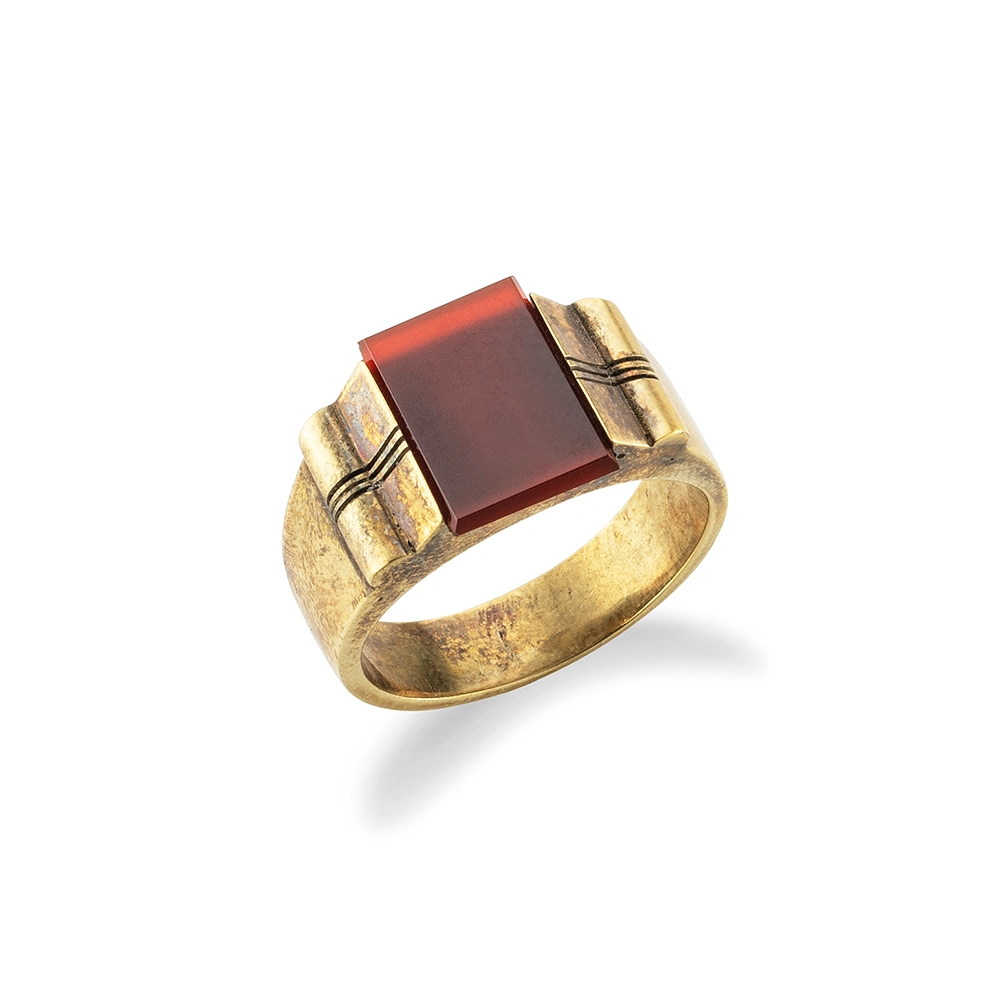
Signet ring with Art Deco shoulders, Bilhmeyer, 1930s
Signets remain a ring which men are proud to wear, even when rings are less in style. King Charles III, when Prince of Wales, was never seen without a gold signet ring on his little finger. And for women, they remain an elegant and personal style statement.
Signet rings have become popular with modern celebrities and with contemporary jewellers for both men and women. Actor Brad Pitt is well known for his David Yurman signet with a jaunty bee on the bezel.
So, although they have not been a practical necessity for many years, the way in which they can signal fashion, taste and identity remains relevant.
The modern wearer can choose a design, whether a simple monogram, a family crest or a design based on their hobbies and interests. Setting a colourful hardstone, perhaps engraved with a design, into the bezel of a classic signet ring creates a jewel which is elegant and sophisticated while showing the personality of the wearer.

Two oval rings by Victor Mayer in the style of signet rings with lapis lazuli, one diamond and engraved bezels, 1980s
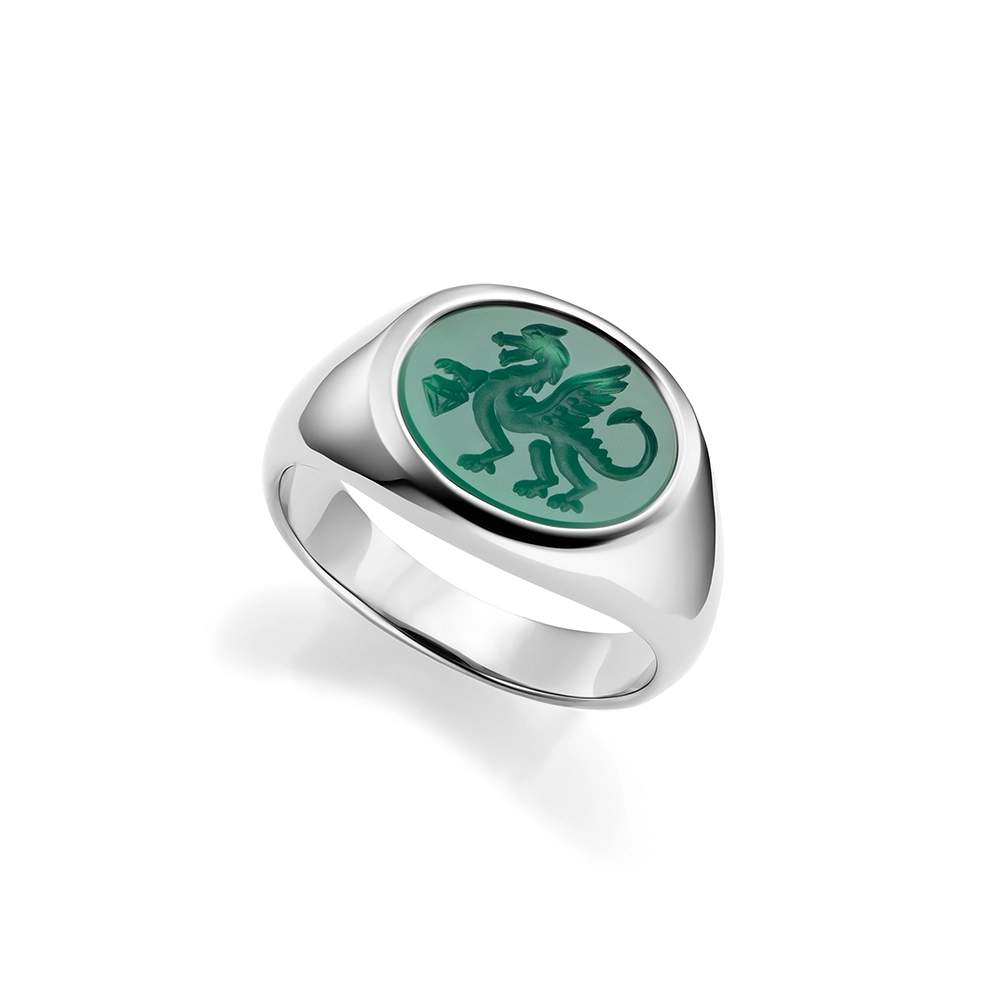
Oval signet ring by Victor Mayer with green agate and engraved with a dragon, 2024
Rachel Church is a jewellery historian and researcher who is particularly interested in the stories behind jewels. She is the author of ‘Rings’ (V&A/ Thames and Hudson 2017) and ‘Brooches and Badges (V&A/ Thames and Hudson 2019). She lectures regularly and writes about jewellery at thelifeofjewels.com.

